
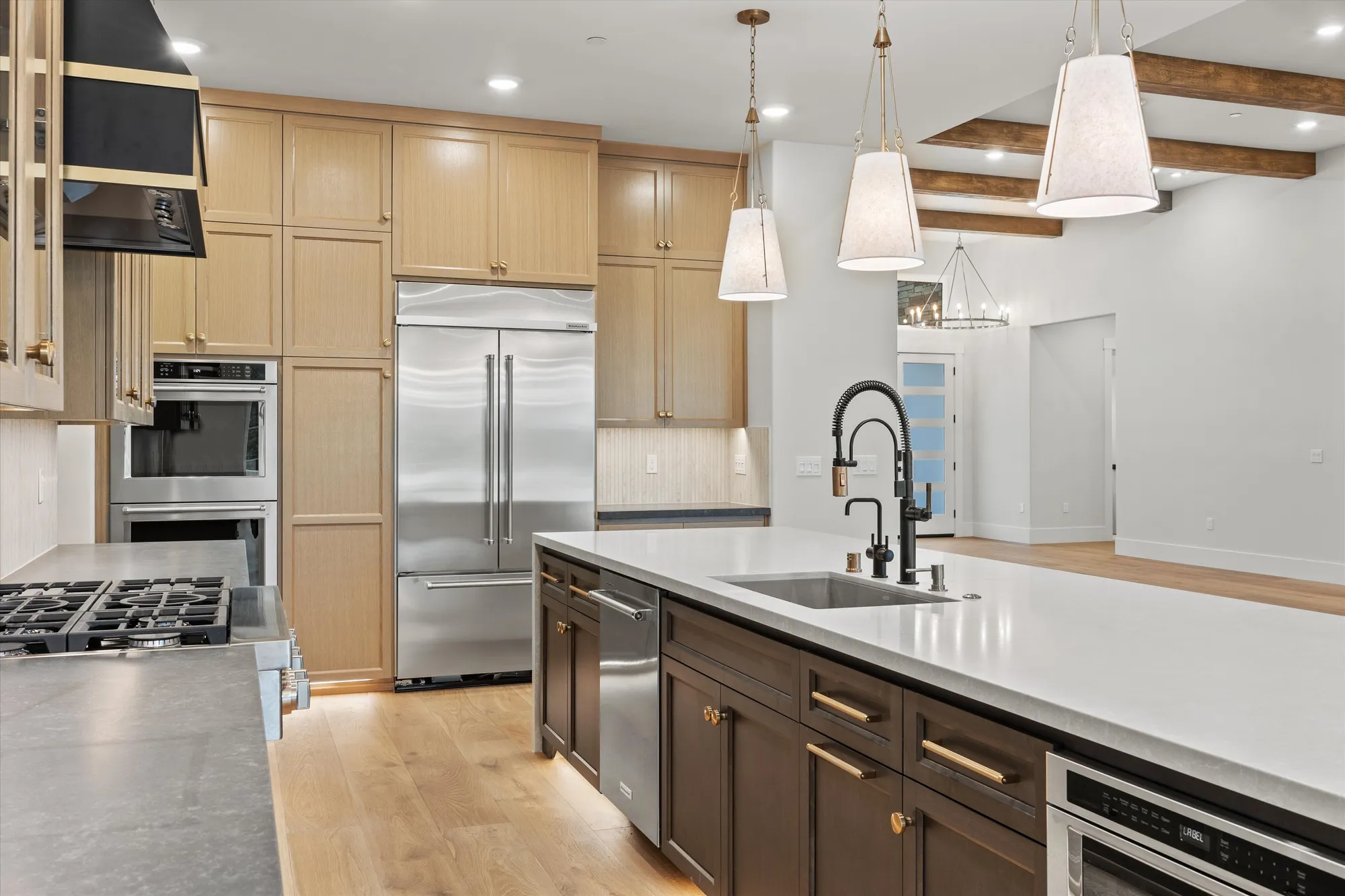
TL;DR
Custom cabinets are built specifically for your space, style, and storage needs, offering unlimited design flexibility, premium materials, and long-term durability. Semi-custom cabinets start with pre-manufactured boxes that allow limited modifications at a lower price point. If you want exact sizing, high-end finishes, and maximum home value, custom cabinets are usually worth the investment. If you’re balancing budget and personalization, semi-custom can be a practical middle ground.
What Are Custom Cabinets?
Custom cabinets are built from scratch for your specific kitchen layout. Every measurement, material, finish, door style, and storage feature is selected based on your home and your goals. There are no standard box sizes limiting the design, which means awkward corners, uneven walls, and unique layouts can be fully optimized.
With custom cabinetry, you’re not choosing from a preset catalog of sizes. Your local cabinet maker builds each unit to exact dimensions. This allows for floor-to-ceiling cabinetry, integrated appliances, oversized islands, or highly specialized storage like spice pull-outs, vertical tray dividers, and concealed appliance garages.
Another defining feature of custom cabinets is construction quality. Many custom shops use solid wood, plywood box construction, dovetail joinery, soft-close hardware, and premium finishes. Because the cabinets are built to order, quality control is typically higher than mass-produced alternatives.
For homeowners who care about craftsmanship, long-term durability, and truly personalized design, custom cabinets offer unmatched flexibility.
What Are Semi-Custom Cabinets?
Semi-custom cabinets fall between stock and fully custom options. They are manufactured in standard sizes but allow limited modifications. You can usually adjust depth, choose from a range of finishes, select different door styles, and add certain accessories.
The boxes themselves are pre-built in common dimensions, which helps reduce production costs and lead times. However, because sizing options are restricted to manufacturer parameters, installers may need to use filler strips or trim pieces to make cabinets fit your space.
Semi-custom cabinets are ideal for kitchens with fairly standard layouts. They provide more personalization than stock cabinets while keeping costs more manageable than fully custom builds.
The tradeoff is flexibility. If your kitchen requires precise measurements or you want truly one-of-a-kind design elements, semi-custom may not deliver the exact result you envision.
Cost Comparison: Custom Cabinets vs Semi-Custom Cabinets
Cost is often the biggest deciding factor.
Custom cabinets typically cost more upfront because they involve individualized design work, skilled labor, premium materials, and made-to-order construction. Pricing varies based on wood species, finish complexity, hardware, and installation requirements. However, the higher investment reflects tailored craftsmanship and long-term durability.
Semi-custom cabinets cost less because manufacturers streamline production. Standardized sizing reduces labor and material waste. While you can upgrade finishes or add accessories, the overall structure is still based on mass production principles.
It’s important to look beyond the initial price tag. Custom cabinets often last decades with minimal issues, while lower-grade materials in semi-custom lines may show wear sooner. When calculating value, consider longevity, repair costs, and resale impact.
Design Flexibility and Personalization
Design flexibility is where custom cabinets truly stand apart.
With custom cabinetry, you can:
• Choose exact dimensions to maximize every inch
• Select unique wood species and specialty finishes
• Incorporate specialty storage solutions
• Design around architectural features
• Create seamless built-ins and integrated panels
Semi-custom cabinets allow personalization, but within boundaries. You can typically choose from a predefined list of door styles, paint colors, stains, and hardware options. While these selections can still create a beautiful kitchen, they may not fully align with a highly specific vision.
If your goal is a kitchen that looks completely tailored to your home rather than “catalog selected,” custom cabinets provide greater creative control.
Installation Differences
Installation is another major factor.
Custom cabinets are built for your exact space, which often results in a tighter fit and fewer filler panels. Because they are measured precisely, installation can feel more seamless. However, the process may take longer due to fabrication timelines.
Semi-custom cabinets typically arrive faster since they are produced in larger manufacturing facilities. Installation may involve additional adjustments on-site to compensate for standardized sizing.
If your project timeline is tight, semi-custom might reduce wait times. If precision and seamless aesthetics matter most, custom cabinetry often delivers a cleaner final result.
Quality and Durability
Custom cabinets frequently use higher-grade materials such as solid hardwood doors, plywood cabinet boxes, and premium hardware systems. The craftsmanship involved in building each cabinet individually tends to result in stronger joinery and longer-lasting performance.
Semi-custom quality varies by manufacturer. Some brands offer durable materials and solid construction, while others rely more heavily on particleboard or MDF components to reduce cost.
For homeowners planning to stay in their home long-term, investing in higher durability can prevent future replacement costs.
Impact on Home Value
Kitchen upgrades consistently rank among the highest return-on-investment home improvements.
Custom cabinets can elevate a kitchen from standard to standout. Buyers often notice high-end cabinetry immediately, especially when paired with premium countertops and appliances. The perception of quality craftsmanship can positively influence resale value.
Semi-custom cabinets can still improve a kitchen’s appeal, particularly when replacing outdated or damaged units. However, they may not command the same premium impression as a fully customized installation.
If you view cabinetry as a long-term investment in both lifestyle and property value, custom may provide stronger returns.
Timeline Considerations
Custom cabinets require design consultation, material selection, shop drawings, fabrication, finishing, and installation. This process can take several weeks to a few months depending on complexity.
Semi-custom cabinets typically have shorter lead times because they rely on existing production systems. If you need cabinets quickly for a renovation schedule, semi-custom may offer faster delivery.
Planning ahead is key. Starting the design process early allows you to weigh both options without rushing the decision.
When Custom Cabinets Make the Most Sense
Custom cabinets are usually the best choice if:
• Your kitchen has unusual dimensions or layout challenges
• You want premium materials and handcrafted details
• You’re designing a luxury or high-end kitchen
• Storage customization is a top priority
• You want a one-of-a-kind aesthetic
In these situations, the benefits of customization outweigh the additional cost.
When Semi-Custom Cabinets Are a Smart Choice
Semi-custom cabinets may be ideal if:
• Your kitchen layout is fairly standard
• You want upgraded finishes without full customization costs
• You’re remodeling on a defined budget
• You need a faster turnaround time
They provide a practical balance between personalization and affordability.
How to Decide What’s Right for You
The best way to determine which option fits your project is to evaluate three key factors: budget, design goals, and timeline.
If your vision includes unique features, floor-to-ceiling cabinetry, or premium wood construction, custom cabinetry will likely align better with your expectations.
If you’re updating a functional kitchen and want improved style without extensive structural changes, semi-custom can deliver strong results.
Working with an experienced cabinet professional can clarify cost differences, design possibilities, and installation timelines specific to your home.
Conclusion: Custom Cabinets vs Semi-Custom Cabinets
Choosing between custom and semi-custom cabinets comes down to priorities. Custom cabinets offer unmatched design freedom, superior craftsmanship, and long-term value. Semi-custom cabinets provide personalization at a more accessible price point with faster production timelines. By weighing your budget, aesthetic goals, and how long you plan to stay in your home, you can confidently select the cabinetry solution that supports both your lifestyle and your investment.